
In the early days, portfolio trackers were seen as optional add-ons. A simple balance check or watchlist was enough. By 2025, dashboards have become essential infrastructure for traders, investors, and even family offices managing multi-asset portfolios. When millions move across wallets and exchanges, trust in a dashboard’s reliability isn’t a bonus — it’s mandatory.
Case example: Consider a trader managing leveraged positions across Binance, Coinbase, and a DeFi lending platform. During a market crash, if the dashboard freezes or miscalculates PnL, panic trades could follow, leading to unnecessary losses. Reliability directly impacts financial outcomes.
Primary threats: data theft, API key misuse, and downtime during volatility
As adoption has grown, so have security concerns. Most trackers depend on API keys and wallet connections to sync data. If those keys are mishandled or stored insecurely, portfolios become vulnerable to theft or manipulation. Likewise, downtime in volatile markets is equally damaging, as missing or delayed data prevents timely decisions.
The biggest risks investors now evaluate when selecting a dashboard include:
- Data breaches exposing sensitive trading histories.
- API key misuse from over-permissive access rights.
- Downtime or lag during the fastest market moves.
“In 2025, a dashboard’s value lies not in the charts but in whether or not you’ll trust it when markets go wild.”
Core Principles of a Secure and Reliable Dashboard
A major distinction in portfolio dashboards is whether they operate custodially or non-custodially. Custodial systems require users to deposit funds, effectively acting like a wallet or exchange. While convenient, this introduces counterparty risk — the provider becomes a single point of failure.
Non-custodial trackers never hold funds. They only read balances from APIs or blockchain addresses. This model is safer by design: even if the service goes offline, assets remain unaffected. For security-focused investors in 2025, non-custodial dashboards are the clear preference.
Transparency in managing API keys and permissions
API keys are central to connecting with centralized exchanges. Poor handling has led to data leaks and, in extreme cases, unauthorized trades. A trustworthy dashboard makes its permissions clear:
- Requests read-only access only.
- Stores keys encrypted, never in plain text.
- Gives users fine-grained control to revoke permissions instantly.
Platforms that push for withdrawal-enabled keys raise red flags. Transparency here often decides whether users stay or leave.
“The safest dashboards request the absolute minimum permissions necessary, and nothing more.”
System resilience: uptime, backups, and continuity
Even a non-custodial tracker is useless if it fails at the worst moment. Reliable platforms plan for redundancy and uptime. Cloud infrastructure with geographic backups, automatic failover, and stress-tested servers ensures dashboards stay responsive during peak volatility.
Some providers also publish uptime metrics publicly, demonstrating accountability. Investors now check these numbers before committing. While 99.9% uptime once sounded impressive, by 2025 anything less risks losing user trust.
Top 7 in 2025
1. CoinDataFlow
https://coindataflow.com/en/portfolio-tracker
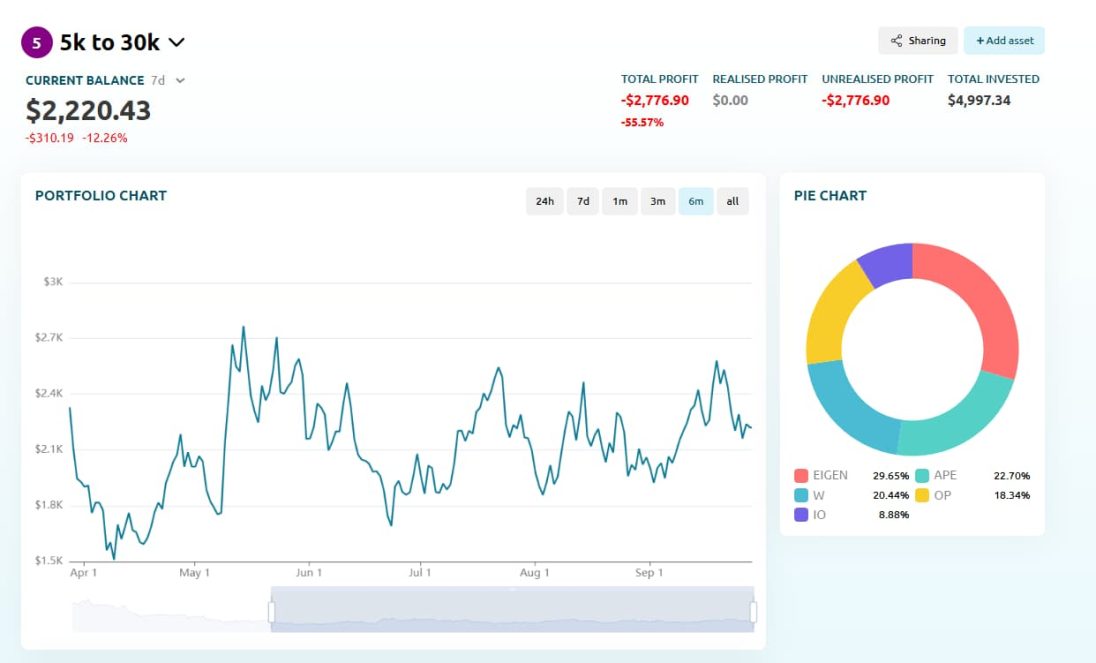
CoinDataFlow is built on a non-custodial model, meaning user funds never leave their control. Data flows through encrypted API connections and wallet lookups, with no custodial storage. Sensitive keys are kept read-only and encrypted, reducing attack risks to a minimum. For investors wary of breaches, this design significantly lowers exposure compared to custodial dashboards.
Example: A user connects Binance, Coinbase, and MetaMask. CoinDataFlow tracks balances without ever holding private keys, ensuring complete user control. Even if the platform goes offline, the assets themselves remain untouched.
Stability during market spikes
Where many dashboards freeze under heavy traffic, CoinDataFlow invests in resilient infrastructure: distributed servers, cloud redundancy, and automated load balancing. This setup keeps the system running even during intense demand, such as Bitcoin flash crashes or DeFi liquidations.
“A non-functional dashboard in a crash is not a dashboard — it’s a danger.”
Balanced user trust vs. feature richness
CoinDataFlow combines strong reliability with a rich feature set. Investors gain advanced ROI/PnL analytics, historical performance charts, and integration with both crypto and traditional assets. While some platforms sacrifice usability for security or vice versa, CoinDataFlow manages to balance both.
Strengths:
- Strong non-custodial security measures.
- Stable performance during volatile events.
- Feature-rich design without compromising safety.
Weaknesses:
- Tool variety may feel overwhelming for those wanting simplicity.
- Mobile version, while functional, still trails desktop in maturity.
2. CoinGecko Portfolio
https://www.coingecko.com/en/portfolio
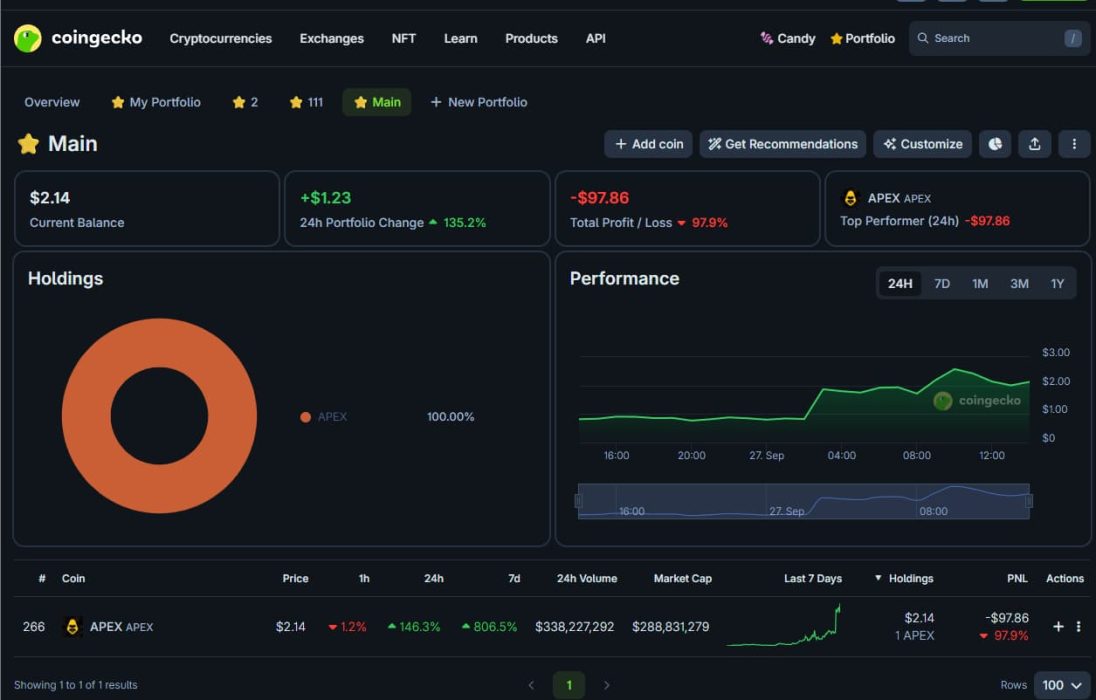
CoinGecko is one of the most recognized names in crypto data, and its portfolio tool builds on that reputation. It’s free to use and tracks thousands of tokens across multiple chains. For beginners or casual users, the benefits are clear: no cost, quick setup, and instant access to reliable price data.
Example: A new investor holding a few altcoins on Binance and MetaMask can track them easily through CoinGecko’s interface without needing a premium plan.
Advanced privacy controls flaws
Despite its wide coverage, the portfolio tracker doesn’t emphasize privacy and security at the same level as specialized dashboards. API integrations exist, but often lack granular permissions or advanced encryption standards. Sensitive data may not be mishandled, but the transparency around security practices is weaker than what professional investors expect in 2025.
For those managing significant value or concerned about data exposure, this limitation stands out. CoinGecko Portfolio is better suited for learning and casual monitoring rather than high-stakes portfolio management.
Strengths:
- Completely free to use.
- Wide token coverage across multiple chains.
- Easy to set up and beginner-friendly.
Weaknesses:
- Limited focus on advanced security practices.
- Fewer privacy-oriented features compared to competitors.
- Not built for heavy or institutional use.
“CoinGecko offers you depth and accessibility but not the ultimate protection level.”
3. Cryptocommunity (Dust.Fund)
Dust.Fund differentiates itself with a focus on community and transparency. It lets users share their portfolios publicly or within groups, enabling open comparison of allocations and strategies. This appeals to those who want social interaction alongside tracking.
Example: A group of retail investors can create a shared dashboard displaying each member’s allocations. This encourages discussion on diversification strategies and performance without relying on screenshots or manual updates.
Prospective threats in data openness
The same sharing feature that makes Dust.Fund unique also introduces risks. Public or semi-public visibility of portfolios increases exposure of sensitive details. Even pseudonymous balances can reveal strategies or wallet identities through patterns. For privacy-conscious users, this setup may feel uncomfortable.
In terms of reliability, Dust.Fund works fine for small and mid-sized portfolios but lacks the redundancy and enterprise-grade infrastructure found in more established platforms.
Strengths:
- Innovative community-sharing model.
- Encourages transparency and peer learning.
- Simple, collaboration-friendly interface.
Weaknesses:
- Portfolio sharing raises privacy concerns.
- Less robust infrastructure than enterprise-focused dashboards.
- Niche appeal, not suitable for every investor.
“Dust.Fund blurs lines between portfolio tracking and social platform — good news for community, bad news for privacy.”
4. Altrady
https://www.altrady.com/features/crypto-portfolio
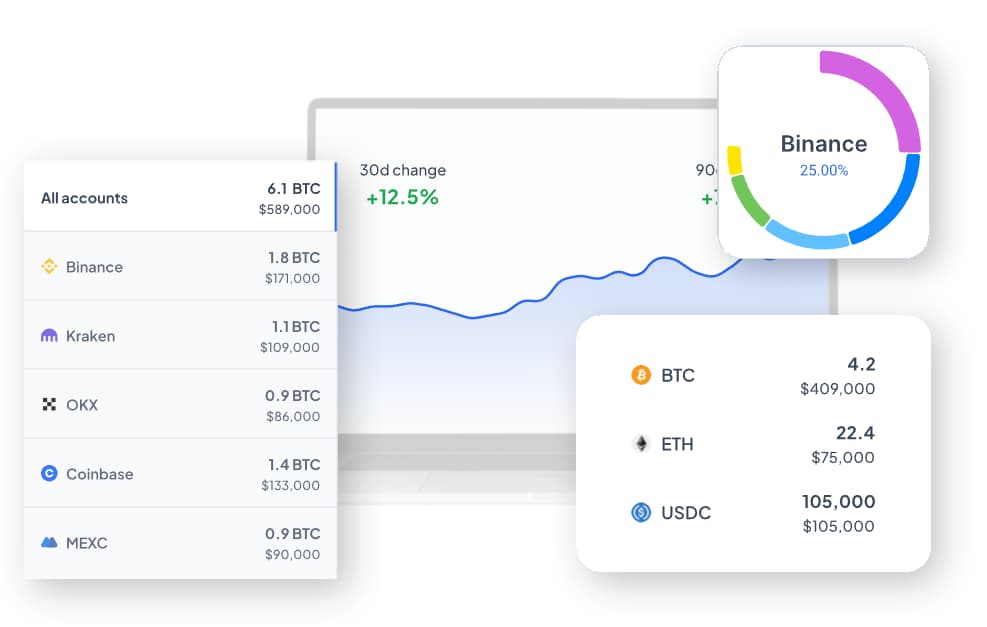
Altrady is designed with active traders in mind. It connects directly with multiple centralized exchanges, letting users trade, check balances, and analyze performance all in one place. For strategy-driven traders, the ability to manage Binance, Kraken, and KuCoin from a single dashboard is a major advantage.
Example: A day trader can place trades on Binance while simultaneously tracking holdings on KuCoin within Altrady’s interface. This eliminates the need to switch between tabs and dashboards during fast-moving markets.
Security complexity for regular users
The challenge lies in handling so many exchange connections. The platform requires API keys with different permissions. While it supports best practices, the sheer number of integrations can overwhelm newcomers. If permissions aren’t configured carefully, the risk of mistakes or overexposure increases.
Reliability under heavy load is generally solid, but the platform’s complexity makes it less appealing to casual investors who only want a simple ROI or net worth check.
Strengths:
- Deep multi-exchange integration.
- Features tailored for professional trading activity.
- Robust performance for high-frequency use.
Weaknesses:
- Security configuration may feel daunting for beginners.
- Overkill for casual investors with simple portfolios.
- Subscription required for full functionality.
“Power lies in the hands of active traders with Altrady, but power never comes without complexity.”
5. Coinigy
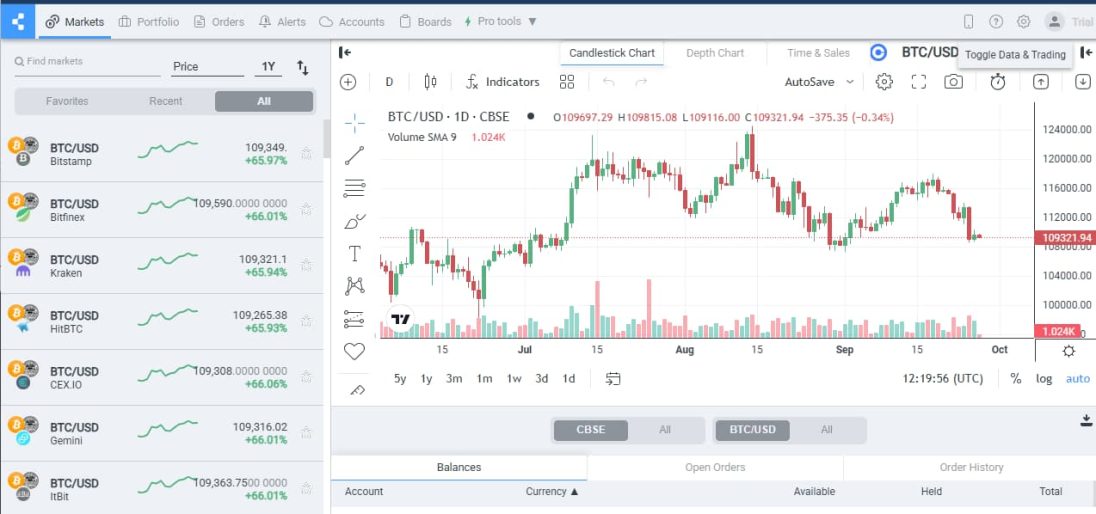
Coinigy has been part of the crypto ecosystem for nearly a decade, making it one of the oldest trading and portfolio dashboards. Its main strength is multi-exchange integration combined with charting tools, which earned it a loyal user base. For traders who value experience and familiarity, its long presence inspires trust.
Example: A long-term trader can use Coinigy to place orders across several exchanges while also viewing portfolio balances and historical charts in one unified dashboard.
Concerns over aging infrastructure
Despite its reputation, Coinigy struggles to keep up with modern expectations. Some users find the interface outdated compared to newer, more intuitive dashboards. Questions have also been raised about whether its infrastructure can handle 2025-level demands, especially during periods of intense trading activity.
Its security practices are adequate but less transparent than newer platforms that emphasize non-custodial architecture and publish uptime metrics publicly. As competition intensifies, Coinigy risks falling behind tools that combine modern UX with stronger security standards.
Strengths:
- Long history with proven reliability.
- Multi-exchange integration with built-in charting.
- Familiar workflow for long-time traders.
Weaknesses:
- Outdated interface design.
- Infrastructure concerns under today’s trading volumes.
- Less transparent about current security practices.
“Coinigy has plenty of experience, but experience doesn’t necessarily guarantee contemporary resilience.”
6. 3Commas
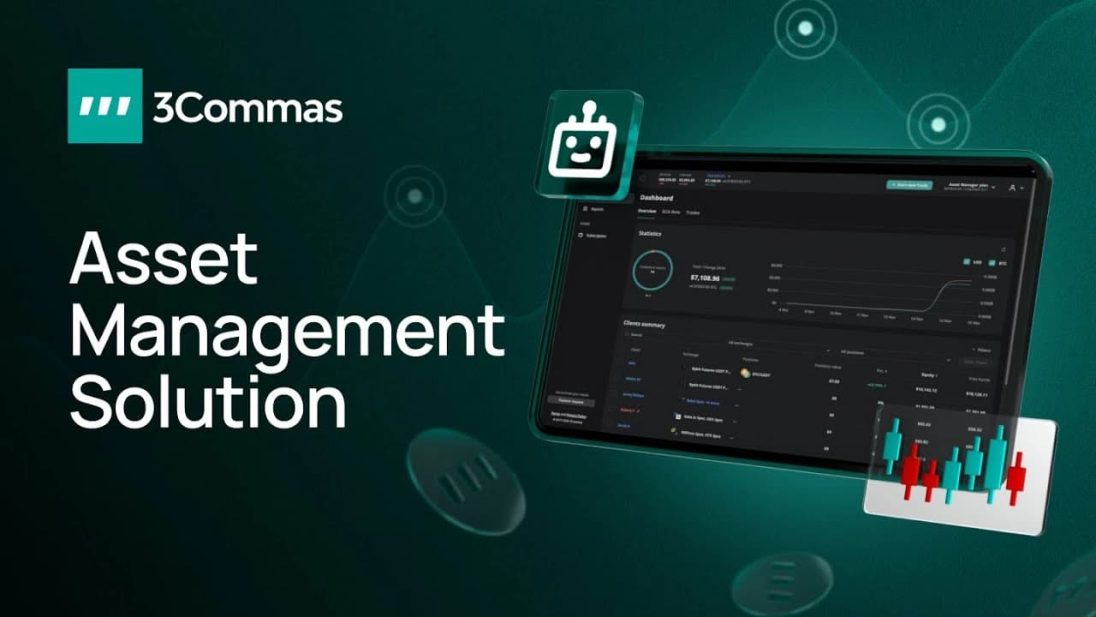
3Commas is widely known for its automation features — trading bots, smart order execution, and portfolio rebalancing. For seasoned traders, these tools save time and even provide strategic advantages. The platform integrates with dozens of exchanges, making it effective for multi-platform strategies.
Example: A trader sets up a grid bot to handle BTC volatility. 3Commas connects to Binance, executes trades automatically, and updates portfolio balances in real time.
The trade-off is in permissions
To enable advanced automation, 3Commas requires API keys with trading rights. While users can — and should — disable withdrawal access, elevated permissions remain risky if keys are ever compromised.
Not user-friendly in terms of safety
For security-focused investors, this requirement can feel unsettling. Unlike non-custodial dashboards that use read-only APIs, 3Commas blurs the line between tracking and execution. The platform has introduced various safety measures, but its reliance on trading-enabled APIs makes it less attractive to conservative users.
Strengths:
- Advanced bot and automation features.
- Broad exchange support.
- Popular among active traders.
Weaknesses:
- Requires trading-enabled API keys.
- Less appealing to users prioritizing maximum safety.
- Complexity may overwhelm beginners.
“3Commas offers traders superpowers of automation — but security purists may consider those superpowers to be vulnerabilities.”
7. Lukka

Lukka positions itself as an institutional-grade platform serving hedge funds, custodians, and enterprises that must meet strict reporting and compliance demands. Its strength lies in producing audit-ready data: GAAP- and IFRS-compliant accounting, regulatory filings, and complete audit trails. For institutions, it offers peace of mind when facing increasingly complex global regulations.
Example: A crypto asset manager overseeing multiple funds can use Lukka to reconcile trades across wallets and exchanges, then generate reports ready for external auditors without extra manual work.
Beyond reach for most retail investors
The same features that make Lukka valuable to institutions make it impractical for individuals. Pricing is enterprise-level, onboarding is complex, and its feature set is heavily geared toward compliance teams rather than personal portfolio tracking. For retail users, Lukka feels like using industrial equipment to water a houseplant — powerful but unnecessary.
Strengths:
- Full compliance with international accounting standards.
- Designed for large funds and professional managers.
- Provides comprehensive audit trails and reconciliation tools.
Weaknesses:
- Too costly and complex for individual investors.
- Interface is designed for auditors, not casual users.
- Narrow scope compared to multipurpose dashboards.
“Lukka brings institutional sophistication but scale makes it out of reach for regular investors.”
Insights from the Comparison
By 2025, most dashboards follow a baseline of security practices. Read-only API keys are now standard, and leading providers encrypt sensitive data. Multi-factor authentication is widely adopted, and many platforms publish security documentation to reassure users. Even free tools like CoinGecko meet these minimum standards, showing how far the industry has advanced compared to earlier years.
Commonly shared recurring weak spots
Despite this progress, several weaknesses remain:
- Lack of transparency: not all platforms clearly explain how keys are stored or managed.
- Over-permissioning: automation-focused tools like 3Commas still demand elevated API rights, increasing risks.
- Stress resilience: downtime or lag during volatility continues to affect platforms with weaker infrastructure.
- Privacy trade-offs: community-driven tools like Dust.Fund expose users, while institutional dashboards like Lukka sacrifice ease of use.
These recurring issues remind investors that no single solution is flawless — due diligence remains essential.
“The safest dashboards are ones that never put you in a situation of having to pick features or trust—those give you both.”
FAQ
What does non-custodial tracking mean to investors?
Non-custodial dashboards never take control of your funds. They read balances through APIs or blockchain explorers but never store or move assets. This means that even if the service goes offline or gets hacked, your coins remain safe in your wallet or exchange account.
Are API keys safe to share with a dashboard?
It depends on the permissions requested. The safest practice is to provide read-only keys with no withdrawal rights. Reputable platforms also encrypt keys locally or in secure cloud storage. If a service requests trading or withdrawal rights without a strong reason, that’s a red flag.
Are free dashboards safe?
Not necessarily less secure. Free dashboards like CoinGecko Portfolio do offer basic protections. However, they may lack advanced controls, like fine-grained permission management or comprehensive uptime reporting. Paid services usually provide stronger security auditing, but cost alone doesn’t guarantee safety.
Which dashboards suit institutional investors?
Institutional-grade platforms such as Fireblocks or Lukka (outside this review’s scope) are designed for compliance, accounting, and audits. They fit hedge funds, custodians, or family offices. For individual traders, however, these platforms are usually too complex and too expensive.
Which security developments emerged in 2025?
- Multi-party computation (MPC) to boost wallet security.
- Public uptime dashboards showing live system status.
- Decentralized key storage to reduce single points of failure.
- AI-driven anomaly detection, spotting unusual access behavior in real time.
How do individual traders verify a platform’s reliability?
A practical checklist includes:
- Reading the platform’s API permission documentation.
- Checking for published uptime reports.
- Looking at independent security audits, if available.
- Testing responsiveness during peak market events with a small portfolio first.
The Final Feature – Trust
By 2025, crypto dashboards are no longer judged by how many tokens they support or how polished their charts look. The real differentiator is whether investors can rely on them to stay online, safeguard sensitive keys, and deliver accurate data during volatile swings.
Some platforms, like CoinDataFlow, manage to combine rich functionality with non-custodial security. Others, like Dust.Fund, bring creative social features but compromise on privacy. Enterprise solutions such as Lukka deliver compliance and audit power, yet remain inaccessible to everyday users. Each approach represents a trade-off.
The takeaway is clear: security and reliability aren’t extras — they’re the core offering. Investors may accept fewer bells and whistles, but they won’t accept dashboards that fail when markets shift. The winners in 2025 will be those that make trust their ultimate feature.
“In an uncertain marketplace, the only genuine alpha a dashboard offers is trust.”