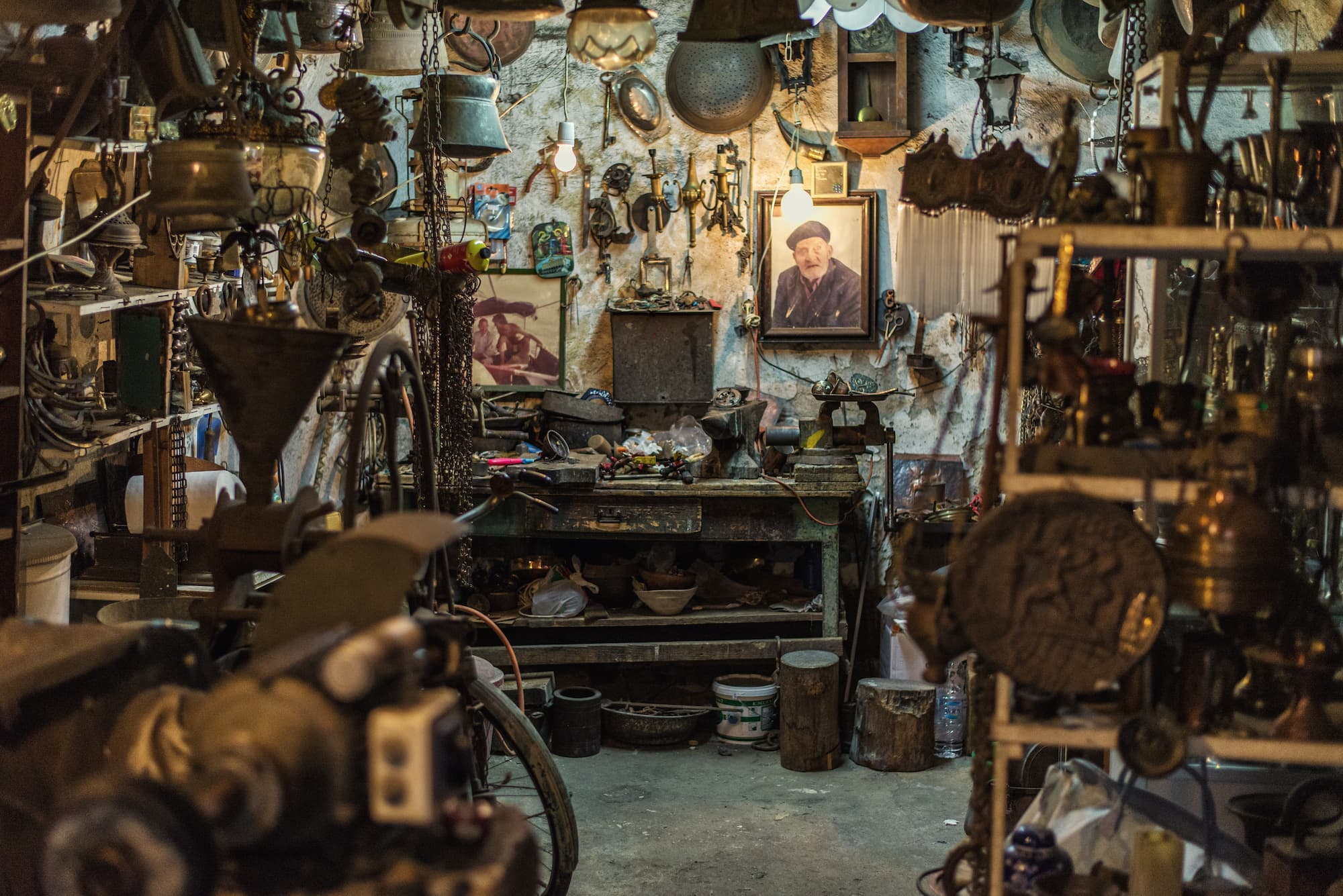
Walk into almost any creative workshop and you’ll notice something unexpected. The finished pieces usually occupy surprisingly little space. Instead, shelves are filled with abandoned prototypes, sketchbooks that refuse to close properly, containers full of test materials, and objects that never reached the final version. At first glance, the room may look untidy. Spend another five minutes there, and the apparent chaos begins to make perfect sense (of creativity).
Those unfinished experiments rarely appear on social media or in online catalogs or shops’ pages, yet they explain far more about a workshop routine and its flow than the polished photographs people usually see. Every failed casting, every scratched sketch, every redesigned buckle records a decision that quietly shaped the next project.
That hidden history is where craftsmanship really lives.
Experience Rarely Arrives All at Once
People often describe talented makers as if they simply woke up knowing how to build beautiful things. Reality tends to be much less dramatic.
Most workshops improve almost invisibly. One project teaches a better way to attach straps. Another reveals that a decorative edge is too fragile. A different commission proves that reducing the weight of a shoulder piece by a few hundred grams makes an enormous difference after an entire day of wearing it.
Months pass. Then years.
Eventually those small lessons become habits, and those habits become part of the workshop’s identity. Visitors may never notice why one piece feels more comfortable or why another appears more balanced, but somebody in the workshop remembers exactly which mistake led to that improvement.
The Details Nobody Talks About
The smallest decisions are often the hardest to explain.
Why does one painted surface look convincing while another feels artificial? Why does a fantasy helmet appear believable before anyone has even examined it closely? There is rarely a single answer. Usually it is the result of dozens of subtle choices that overlap until the viewer stops analyzing and simply accepts what they see (or want to visualize).
Oddly enough, success often depends on details that nobody consciously notices.
Looking Far and Beyond
A catalog can tell you what a workshop produces. It cannot always explain why those products look the way they do.
That story usually begins much earlier—with conversations, sketches pinned to a wall, rejected ideas, and the willingness to rebuild something that almost worked simply because “almost” was not good enough. Creative workshops are shaped as much by their decisions as by their finished objects.
That is one reason I enjoy reading about LARPSHOPKEEPER article before looking through the products themselves. Understanding how a workshop approaches concept design, lightweight materials, traditional craftsmanship, and modern production methods gives the finished work much more context. The objects become easier to appreciate once you understand the thinking behind them.
Workshops Reflect the People Inside Them
Machines are becoming more capable every year, yet they still do not develop taste.
Software can generate a shape. A printer can produce a prototype. Modern equipment can make production more consistent. None of those tools decides whether a design feels elegant, whether proportions look natural, or whether a painted surface captures the atmosphere the artist imagined at the beginning of the project.
Why Openness Matters
One change I’ve particularly enjoyed over the last 5 years is that many independent workshops have become less secretive about their process. Instead of showing only the finished photographs, they increasingly share imperfect moments: rough sketches, silicone molds waiting to be filled, freshly cast parts, painting experiments, and even mistakes that forced an entire design to change direction. My personal opinion about this – following their social media pages sometimes opens up some of their special recipes or secrets, or even failures!
Ironically, those behind-the-scenes (WIPs) moments often inspire more confidence than flawless marketing images ever could. Those teams remind us that handmade work is exactly that – made by people who test ideas, solve unexpected problems, change their minds, and gradually improve through experience.
Perhaps that is what separates a LARPing workshop from a factory. A factory produces objects. A workshop quietly accumulates stories, and every finished piece carries a small part of them into the hands of someone else.